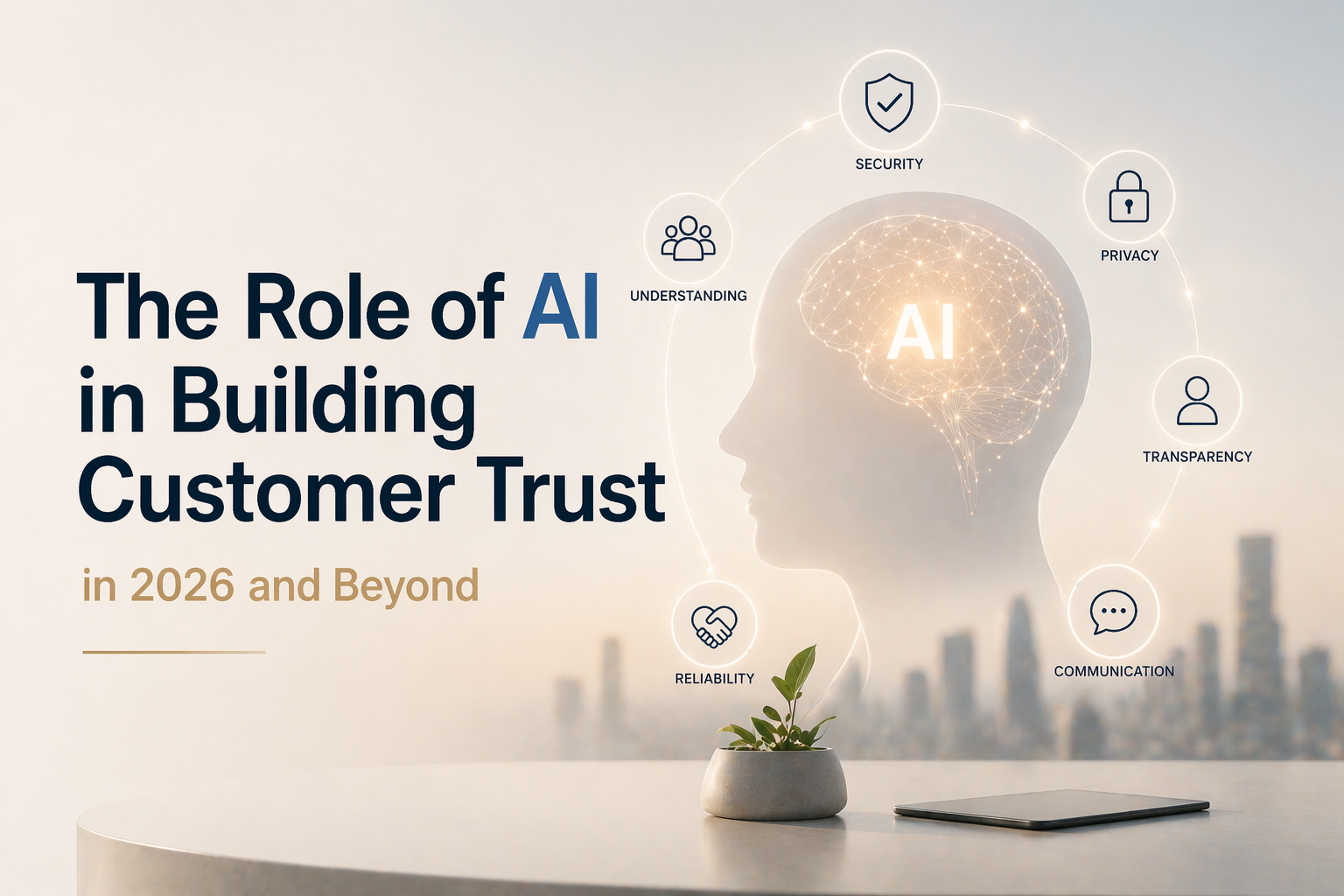
The Role of AI in Building Customer Trust in 2026 and Beyond
Artificial intelligence once a futuristic concept, is now deeply embedded in how businesses interact with customers. From personalized recommendations to automated support, AI has become a central driver of customer experience. But as its influence grows, so does a critical question: can customers trust it?
In 2026 and beyond, trust is not just a “nice-to-have” but a defining factor in whether a business succeeds or fails. Customers are more informed, more cautious, and more sensitive to how their data is used. While AI offers powerful tools to enhance experiences, it also introduces risks that can erode confidence if not handled properly. Let’s explore how AI is shaping customer trust, the challenges it presents, and how businesses can leverage it responsibly to build lasting relationships.
Why Customer Trust Matters More Than Ever in the AI Era
The Evolution of Digital Trust
Customer trust has evolved significantly over the past decade. Initially, trust was built through brand reputation and consistent service delivery. As digital platforms grew, trust shifted toward data protection and transparency. Trust is no longer passive. It must be actively earned through technology.
Today, in the AI-driven era, trust hinges on how intelligently and ethically systems operate. Customers now expect:
- Clear explanations of how decisions are made
- Responsible use of personal data
- Fair and unbiased outcomes
Trust as a Growth Driver
Trust directly impacts business performance in measurable ways:
- Higher conversion rates. Customers are most likely to buy from brands that they trust.
- Improved retention. Trust builds brand loyalty.
- Stronger advocacy. When customers are satisfied, they become brand ambassadors.
In competitive markets, trust becomes a key differentiator, especially when products and prices are similar.
The Trust Crisis in AI Adoption
Despite its benefits, AI has introduced a wave of skepticism. Customers worry about misuse of personal data, lack of transparency, and misinformation. This trust gap means that businesses must work harder to prove that their AI systems are reliable, ethical and user-friendly.
How AI is Transforming Customer Trust
Personalized Customer Experiences at Scale
AI enables businesses to understand customer behavior at an unprecedented level through personalization and predictive insights. By analyzing data, AI can recommend products tailored to individual preferences, predict customer needs before they arise and deliver highly relevant content.
When done right, personalization builds trust by making customers understood. However, there should be a balance ass excessive personalization can feel intrusive.
24/7 Intelligent Customer Support
AI-powered chatbots and virtual assistants provide instant responses and reduce wait time. They also handle routine inquiries efficiently. This improves reliability and convenience, which are two essential components of trust.
Enhanced Data Security and Fraud Detection
AI detects threats in real time and protects customer data. It prevents fraudulent activities or transactions, identifying security threats before they escalate. Customers have increased confidence and trust in a brand when they know their data is safe.
Transparency Through Explainable AI (XAI)
Explainable AI helps users understand decisions, improving trust. They do this by providing clear reasons behind decisions. AI make algorithms more understandable and allow users to question outcomes. Transparency transforms AI from a mysterious system to a trusted decision-making partner.
Key Challenges of AI in Building Trust
Data Privacy and Ethical Concerns
Customers demand clear consent and ethical handling of data. Key issues include lack of clear consent, data sharing without user awareness and over collection of personal data.
Bias and Fairness in AI Algorithms
Bias can lead to unfair outcomes and damage trust. This can be seen in discriminatory outcomes, unfair recommendations and negative customer experiences.
Over-Automation and Loss of Human Touch
Too much automation reduces emotional connection. Customers can get frustrated when the interaction feels impersonal.
Misinformation and AI-Generated Content Risks
Fake content and deepfakes can erode credibility. If customers cannot distinguish truth from fabrication, trust erodes quickly.
Best Practices for Using AI to Build Customer Trust
- Prioritize Transparency and Communication: Clearly disclose AI usage and data handling.
- Implement Ethical AI Frameworks: Ensure fairness, accountability, and privacy.
- Combine Human and AI Interactions: Balance efficiency with empathy.
- Strengthen Data Protection Measures: Use encryption and comply with regulations.
- Continuously Audit and Improve AI Systems: Monitor and improve performance regularly.
The Role of Generative AI in Trust Building
- Content Creation and Authenticity: Maintain accuracy and authenticity in AI-generated content, ensure factual accuracy and avoid over-automation.
- AI in Customer Feedback Analysis: Analyze feedback to improve services. This can be done when brands identify trends and sentiment, detect emerging issues.
- Risks of Generative AI in Brand Credibility: Avoid misinformation and loss of authenticity.
Future Trends: AI and Customer Trust Beyond 2026
- Rise of Trust-Centric AI Regulations: More laws will enforce ethical AI use. Compliance to these will be essential for brand trust.
- AI-Powered Trust Scores and Reputation Systems: Trust metrics will influence decisions. Future systems may evaluate trustworthiness using customer feedback, behavioural data and predictive analytics.
- Decentralized Identity and AI: Users will control their own data, share information securely and reduce reliance on centralized platforms.
- Emotionally Intelligent AI Systems: AI will respond to emotions more effectively if enhanced to be emotionally aware.
Real-World Examples of AI Building Customer Trust
- E-commerce Personalization Success Stories: AI improves shopping experiences. Today online retailers recommend relevant products, optimize shopping and improve customer satisfaction through AI.
- AI in Banking and Fraud Prevention: AI is used to detect suspicious activity and prevent fraud. This ensures transaction security.
- Healthcare AI and Patient Trust: AI improves diagnosis and care and is used for personalized treatment plans.
Actionable Strategies for Businesses in 2026
- Building a Trust-First AI Strategy by the design of AI systems with trust as a priority.
- Training Teams on Ethical AI Use: Educate employees on responsible practices.
- Choosing the Right AI Tools: Select reliable and transparent tools.
AI is transforming business interactions, but trust remains essential. Companies that prioritize ethical, transparent AI will succeed in the long term.
Other articles that discuss trust in marketing and AI:
Can Customers Trust AI-Driven Marketing?
Human vs AI in Marketing: Where Trust Is Won or Lost
Trust Is the New Marketing Currency